The end of the Assad Regime – what next?
3 min read
Guest contributor Alejandro Middle Eastern Desk
The sudden fall of the Assad Regime was unexpected. Syrians across the country and outside of it are celebrating the end of a brutal dictator who will be remembered for ruthlessly inhumane tactics of war that included the indiscriminate use of barrel bombs, chemical gas, and torture. An instinctive reaction among some is that Syria is finally free and justice has been served.
However, things are never that easy. The fact that Syria’s stunning drive to freedom comes with Hay’at Tahrir Al-Sham at the wheel, a terrorist organization in the eyes of the US, UK, and other countries, raises both eyebrows. The organization has links that stretch back to Jabhat Al-Nusra and Al-Qa’ida. Besides, in recent times armed Islamic militias making sudden moves for power hasn’t worked out too well for the locals, whether it was ISIS’ takeover of Raqqa, Taliban control and re-control of Afghanistan, Hamas October 7th offensive, etc.
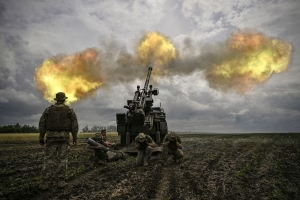
Beyond local Syrian dynamics are the regional and even global impacts as a result of Assad’s departure. The past few months have seen increasing Russian pressure on the Ukraine with most analysts assuming that President Trump will be more favourable to President Putin. The same analysts argue that both Ukraine and Russia are therefore pounding each other, with support from their allies, harder than ever before any deal making starts. Most of us love a conspiracy. Given that Russia was one of the main reasons that the Assad regime could continue in power, does the sudden success of Syrian opposition groups point to Western ‘interference’ in a bid to try and stretch Russian forces more thinly?
The conspiracy is not that outlandish and sits within a wider macro-conspiracy. The fall of the Assad Regime in Syria is just the latest sign that the Iranian Axis of Resistance is in trouble. Hamas and Hezbollah have taken a beating the likes of which we have not seen in decades. It seems inconceivable that Iran could exert power through Lebanon and Palestine today. Iran has even suffered attacks from ISIS on domestic soil. The macro-conspiracy asserts itself: there is a Key Power deal hidden behind the scenes where Russia can keep what it has taken in the Donbass but has to suspend its support to the Axis of Resistance so that President Trump, with Israeli and likely Saudi Arabian support, can get back to isolating Iran.
The patterns of information consumption that define our age suggest that the veracity of such conspiracies is not important. What matters is whether they are believable and sit within existing narratives. They are and they do. Just one tiny example: civilians across the Middle East have long argued that the US could end conflicts in their countries in a day if it wanted to. The speed of the HTS takeover will feed into that narrative and bolster the impression of a hidden Western hand.
Regardless, the next weeks and months will show us what is accident and what is design. Keep an eye on the Euphrates Valley as this is an intensely resource-rich and strategically-valuable piece of land. Will Russian bases close and will Iran ramp up support to its most loyal PMF militia in a bid to push back? More firmly within Iraq, will cities once under ISIS’ hold and where people still retain strong Sunni convictions think that they can now more forcibly challenge, under an ISIS 2.0, what they perceive as the Iran-friendly pro-Shia national government of Iraq? Even further afield, will Iran double down on its support to Houthi forces that will translate into an intensification of conflict over there too? If the Middle East has been a headache for strategists, it is about to get a whole lot worse.